Family & Relationships · Parenting
Why “I Want More” Doesn’t Mean Your Child Is Ungrateful
What children are really learning about wanting, gratitude, and enough.
The Sage Rose House Journal · 4 min read
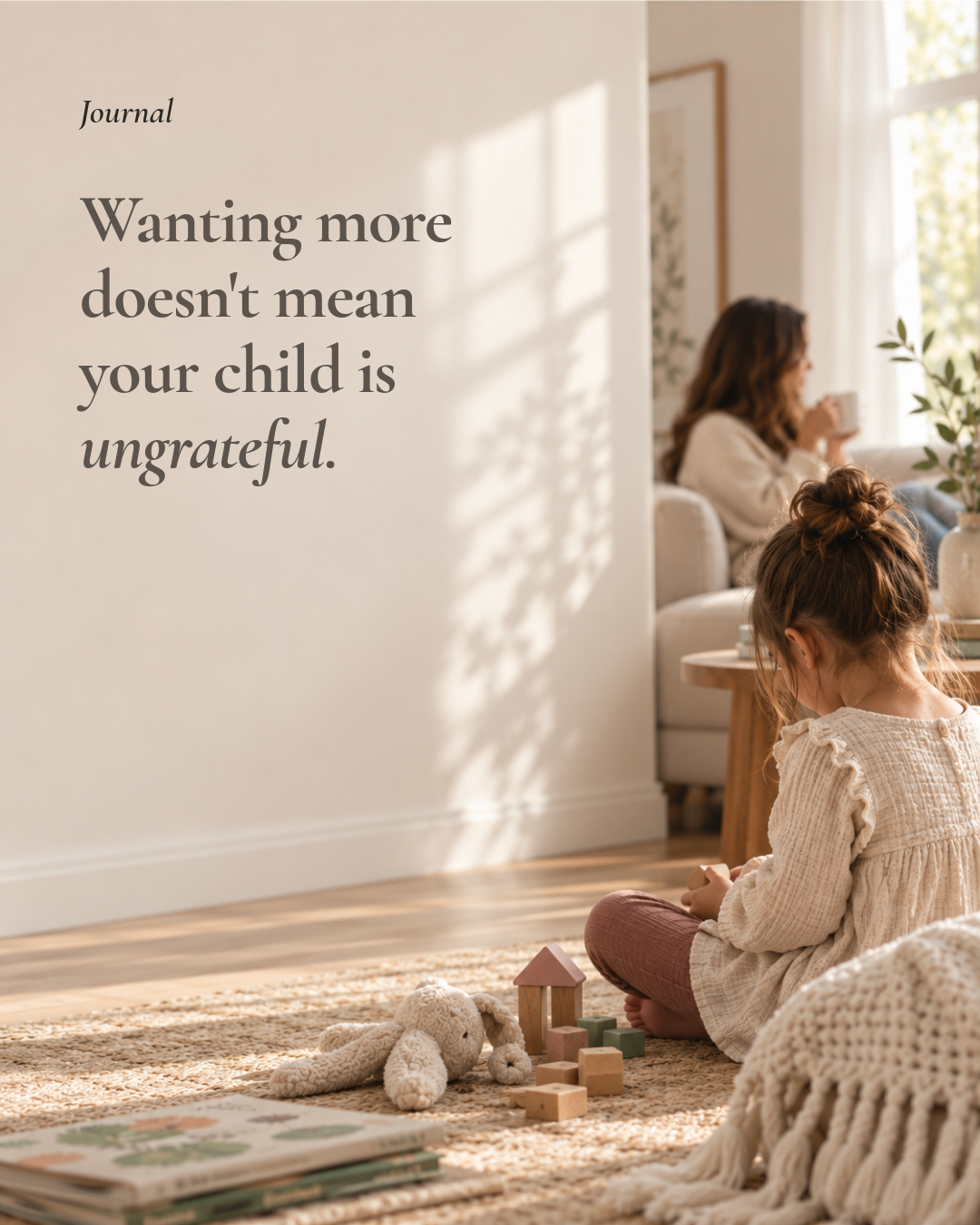
Your child finally gets something they have been asking for. They are excited, they play with it, and then, sometimes much sooner than expected, you hear:
“Can I get the other one too?”
It can be frustrating. They already have so much, so why does there always seem to be something else?
For many parents, that question quickly becomes another one: Am I raising an ungrateful child?
Probably not.
Children can appreciate what they have and still want something new. Learning how to handle that feeling is part of growing up.
They are surrounded by reasons to want more
Children have always wanted things. What has changed is how often something new is placed in front of them.
A toy appears in a video. A friend brings something new to school. Another game, trend or product suddenly becomes something they want too.
Adults experience this as well. We simply have more practice separating “I want this” from “I need this now.”
Children are still learning that distinction. Asking for something else doesn’t necessarily mean they failed to appreciate what they already received.
Gratitude doesn’t mean being satisfied all the time
We can love our home and still want to change something in it. We can appreciate what we own and still look forward to buying something new. Children can hold both feelings too.
When every request is answered with “You should be grateful for what you have,” gratitude can begin to sound more like guilt than appreciation.
A better lesson is helping children understand that wanting something new doesn’t reduce the value of what they already have.
That takes more than a forced thank you.
Children begin to understand gratitude when they notice that someone chose a gift for them, prepared their dinner, shared something or spent time helping them. Most of that learning happens quietly, through ordinary family life.
Sometimes the answer can simply be “not now”
Children also need opportunities to want something without receiving it immediately.
They can wait for a birthday, save toward something or discover a week later that the thing they desperately wanted isn’t that important anymore.
You can listen when your child tells you all about the new toy or sneakers. You can understand why they want them and still decide not to buy them.
Wanting doesn’t always need an immediate solution.
What we are really trying to teach
There will always be another birthday list, another trend and another “Can I have this?”
The goal isn’t to raise children who never ask for more. It is to help them understand the difference between wanting something and needing it, receiving something and expecting it, owning something and valuing it.
Those small lessons eventually become part of how they see possessions, other people’s efforts and what it means to have enough.
And that is a much deeper kind of gratitude.